Occupational environmental protection
We want all our production and sales facilities to be operated efficiently and in an environmentally and climate-friendly manner. This includes saving energy and reducing our direct and energy-related indirect greenhouse gas emissions.
Protecting the environment, resources, and climate
Climate change presents humanity with an enormous global challenge. Entire ecosystems are severely impacted and threatened, extreme weather events are becoming more frequent, and the climate system is at risk of reaching irreversible tipping points. These changes are having an increasing impact on the foundations of our lives and pose an ever-greater risk to economic stability.
Environmental and climate protection, therefore, also play a key role in our business processes. As part of our environmental data management, dedicated sustainability officers have been appointed at our subsidiaries in core and growth markets. For these locations, we have been recording individual corporate carbon footprints annually since 2019. To assess progress toward our company-wide reduction target of up to 25%, we have prepared an annual projection of our greenhouse gas emissions for the target year, taking into account our business growth and all measures already implemented or planned. As a result, we have been able to identify key levers for reduction in recent years and can continue to implement further necessary reduction measures as needed in the future.
PLANET Goal 2025
As part of the PASSION 2025 strategy, we set a goal to reduce Scope 1 emissions and Scope 2 emissions in our core and growth markets by 25% compared to the base year of 2019 by 2025. Our 25% reduction target was deliberately defined as an absolute target, not linked to sales or production volumes. The GHG reduction was thus pursued independently of our company’s growth: Since 2019, we have successfully expanded our business, commissioned new sites, and significantly increased both revenue and production volumes. This meant that growth-related GHG emissions had to be offset through corresponding measures.
Despite this development and our growth, we have succeeded in reducing absolute Scope 1 and Scope 2 GHG emissions by 24.9%, thereby achieving our target. The following figure illustrates the trend in our Scope 1 emissions and Scope 2 emissions from the base year 2019 through the target year 2025.

To view the chart, please rotate your phone and reload the page.
To illustrate the reduction measures, a scenario was calculated in an additional chart for the target year 2025 that shows GHG emissions without taking the implemented reduction measures into account. This is shown on the very left. On the very right are the actual GHG emissions calculated for 2025 following the implementation of our measures.
It also shows how the emissions reduction in the target year 2025 is distributed across our most significant levers: the switch to green electricity, the electrification of the vehicle fleet, and other efficiency measures.
The graph shows that in 2025, we were able to reduce GHG emissions by a total of 38.2% compared to the scenario without measures. The difference from the communicated reduction of 24.9% shown in the figure above essentially represents the offset component in the target year that was additionally required to offset our growth.
To view the chart, please rotate your phone and reload the page.
Corporate Carbon Footprint
During the reporting year, we calculated the Group-wide Corporate Carbon Footprint (CCF) for all Group companies in accordance with the Greenhouse Gas Protocol (GHG Protocol). It includes company-wide Scope 1 and Scope 2 emissions, which have already served as the basis for our reduction target in our core and growth markets. In addition, the CCF also captures material Scope 3 emissions along the value chain. This creates a new, comprehensive data foundation for our climate management and the further development of our reduction strategy. The transparency gained regarding all GHG emission sources helps us identify where we stand today and which areas of action we must prioritise in the future.
Scope 1 emissions are direct emissions from our own sources, such as the combustion of fuels for heating systems or the fuel consumption of our own or leased vehicle fleet. At UZIN UTZ, there are no direct emissions from chemical or physical processes that exceed the emissions resulting from the direct combustion of fossil fuels. Scope 2 emissions include indirect emissions from purchased electricity and heat. Both location-based and market-based calculation methods are applied here: The location-based methodology is based on the average electricity mix of a specific region, while the market-based methodology also takes into account contractual instruments, such as the purchase of green electricity with guarantees of origin. Scope 3 emissions encompass upstream and downstream GHG emissions along the value chain that are not included in either Scope 1 or Scope 2. For UZIN UTZ, the key Scope 3 categories “Purchased Goods and Services,” “Downstream Transportation,” and “End-of-Life Treatment of Sold Products” are captured.
Measures for Occupational Environmental Protection (Scope 1&2)
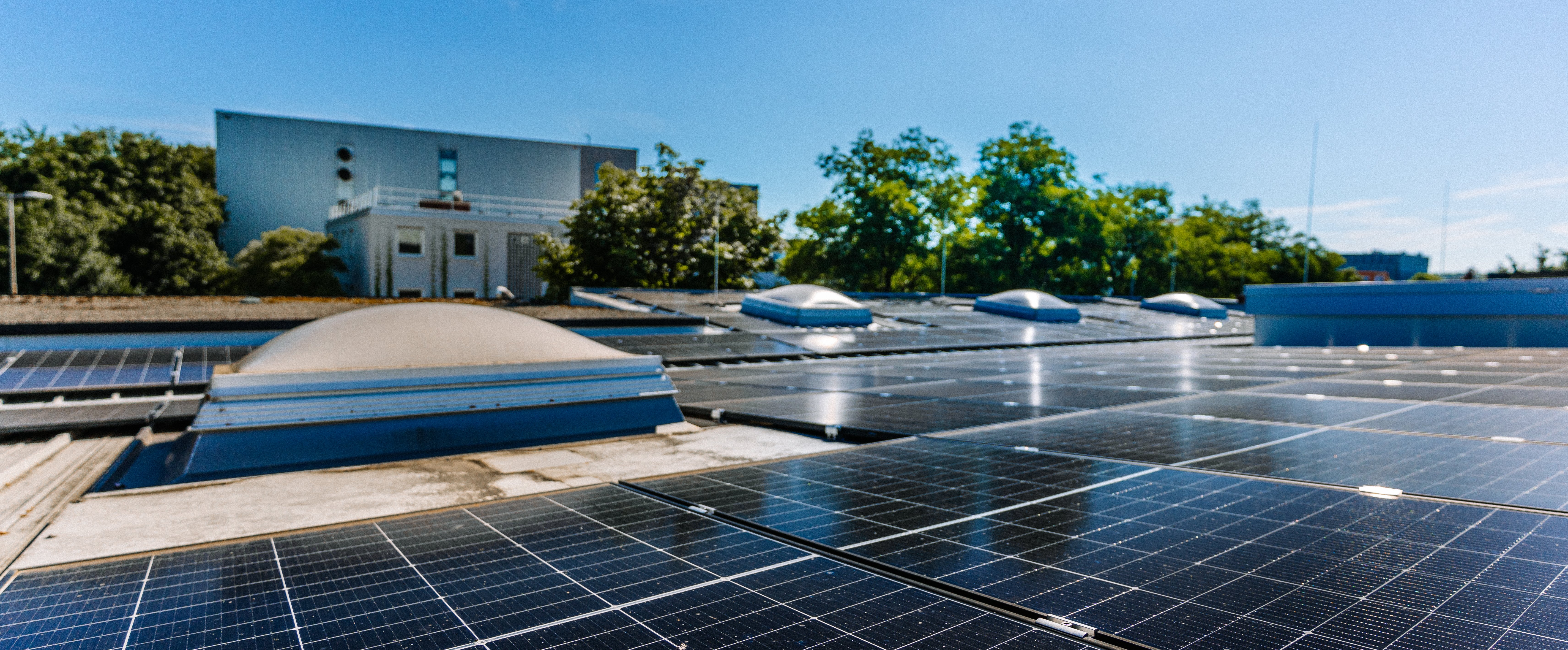
When it comes to environmental protection in our operations, we continue to focus on energy efficiency and renewable energy. Across the Group, over 70% of our locations obtain electricity from renewable sources or have installed additional photovoltaic systems for power generation. In total, photovoltaic systems with an installed capacity of over 1,850 kWp are in operation at our locations. In 2025, our electricity consumption was 10,719 MWh, 93% of which came from renewable energy sources.
A comprehensive overview of the Uzin Utz Group’s energy consumption is provided below:
| Energy, Uzin Utz Group (in MWh) | 2025 |
| Electricity | 10,719.0 |
| District heating | 2,832.4 |
| Gas (propane, natural gas, and offset gas) | 4,178.0 |
| Heating oil | 413.2 |
| Pellets | 511.0 |
| Other | 58.0 |
| Total Energy | 18,711.7 |
Since 2025, Uzin Utz North America, Inc. has been purchasing Renewable Energy Certificates (RECs) for its facilities in Waco, Dover, and Aurora in the United States. RECs are recognised, tradable certificates of origin in the United States that serve as proof of the purchase of renewable electricity. One REC corresponds to one MWh of electricity from renewable sources such as wind, solar, or biomass. The targeted use of RECs supports our strategy to decarbonise our sites in the U.S.
At the Uzin Utz Schweiz AG site in Buochs, the oil-fired heating system has been replaced by a geothermal heat pump. A new geothermal heat pump is also in use at the Uzin Utz Nederland B.V. site in Haaksbergen. Geothermal energy is a renewable energy source that utilises heat from the earth’s interior and is therefore continuously and reliably available. By using a geothermal heat pump, energy is extracted from the ground to heat buildings and provide hot water.
In 2024, a new photovoltaic system with a capacity of approximately 24 kWp was commissioned at the Rugby site of Uzin Utz United Kingdom Ltd. In addition to the office space in Rugby, the training centre in Stafford has also been powered by solar panels for some time now. This means that we are increasingly able to rely on solar energy at both of our locations in England.
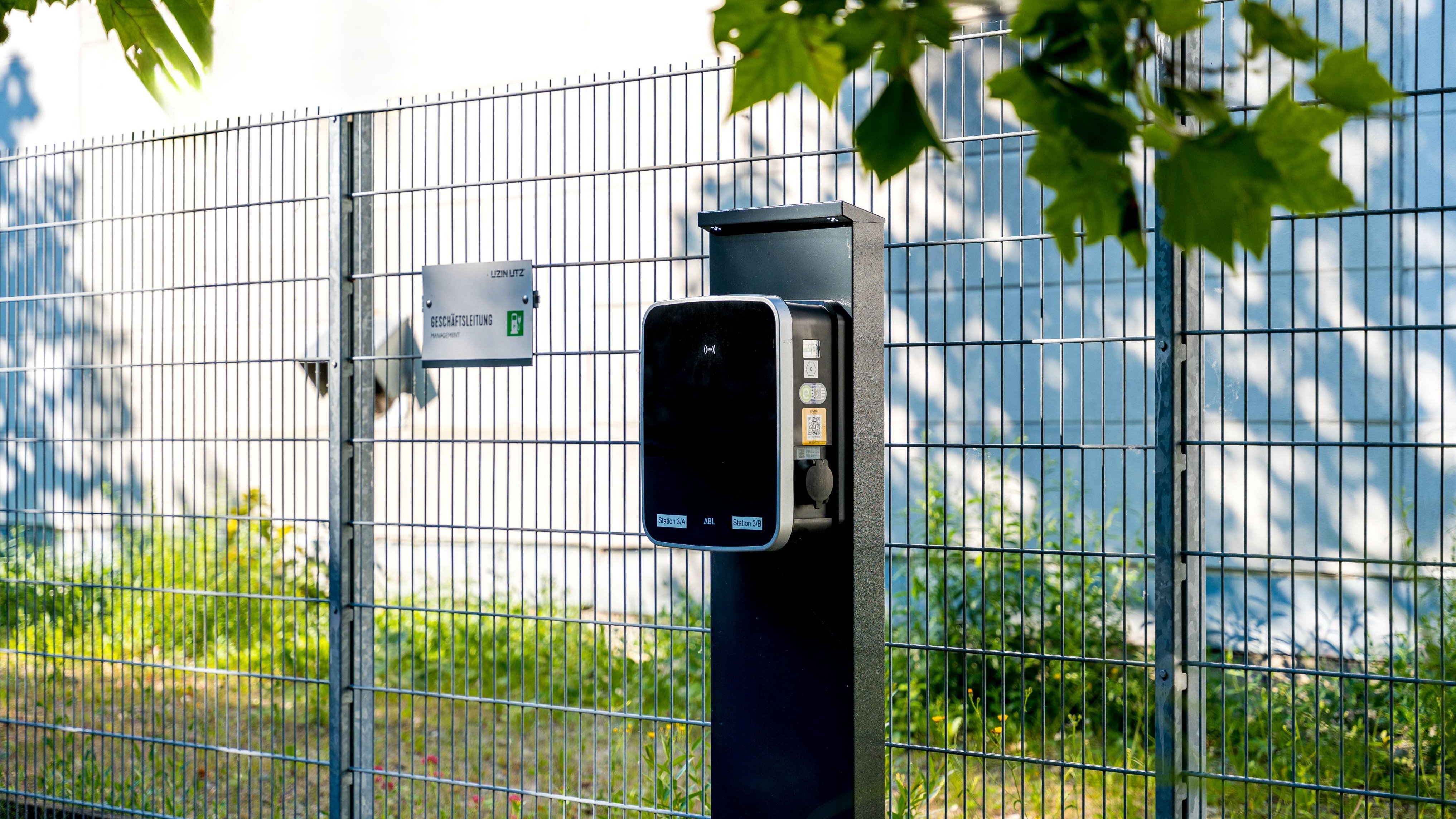
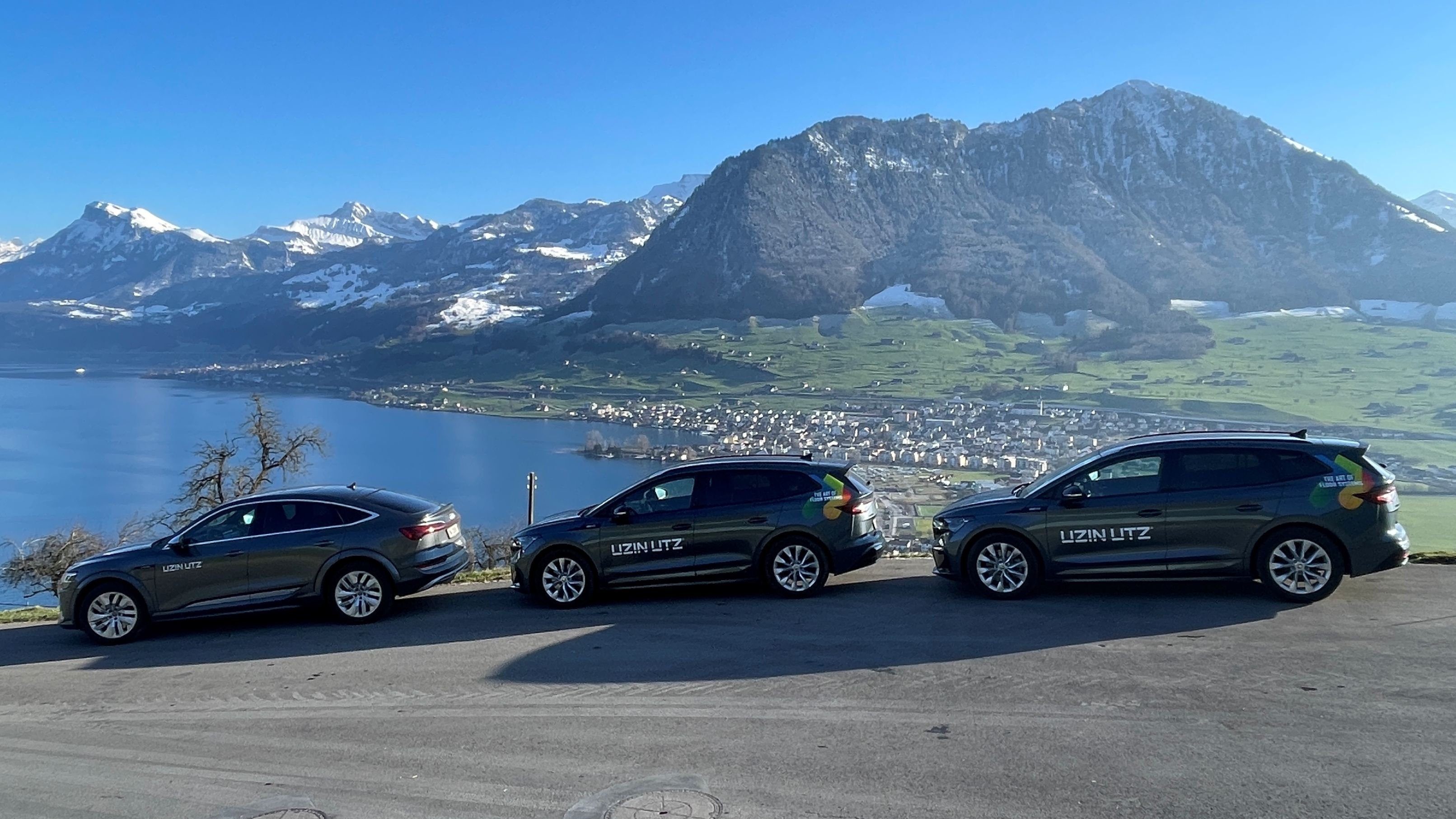
As part of our efforts to optimise our logistics processes and reduce our group-wide GHG emissions, we are actively pursuing the electrification of our vehicle fleet. Currently, 36% of our group-wide fleet consists of electric and hybrid vehicles. In the 2025 reporting year alone, we increased the number of electric vehicles across the group by 29%.
Key Scope 3 Categories and Measures
The Group-wide CCF also covers the key Scope 3 categories along the value chain. For UZIN UTZ, the key Scope 3 categories “Purchased Goods and Services,” “Downstream Transportation,” and “End-of-Life Treatment of Sold Products” are tracked. We placed particular emphasis on these categories during the reporting year and implemented measures that either facilitate the tracking of GHG emissions or reduce them.

Category 3.1 refers to “Purchased Goods and Services” and includes GHG emissions from the raw materials we purchase, such as cement and dispersions. It represents the largest source of GHG emissions within our Scope 3 categories. Due to this high proportion, we are placing a special focus on this area and have implemented a variety of measures during the reporting year, such as the development of UZIN FusionTec technology and the increased use of bio-based raw materials using the biomass balance method.

Category 3.9 refers to “Downstream Transportation.” This encompasses GHG emissions from downstream logistics processes that arise from the transport of our products after they leave our facilities. This includes, in particular, transport by truck, rail, and ship to our customers. To track these GHG emissions, logistics processes have been optimised, such as the development of an internal logistics tool and the launch of a pilot project using an electric truck to electrify the supply chain.

Category 3.12 refers to the “End-of-Life Treatment of Sold Products” and includes GHG emissions generated during the disposal of our products after their useful life. This includes, in particular, disposal in landfills or waste incineration, as well as recycling processes. It represents the second-largest Scope 3 category for UZIN UTZ. To reduce these GHG emissions, we rely, among other things, on products manufactured using the biomass balance method.
The summary table of GHG emissions presented below refers to the reporting year 2025 and covers all significant activities and companies of the Uzin Utz Group in accordance with the operational control approach. The calculation of the CCF is based on the methodology of the Greenhouse Gas Protocol (GHG Protocol) Corporate Standard, which categorises GHG emissions into the three scopes described. All relevant greenhouse gases (CO₂, CH₄, N₂O, HFCs/PFCs, SF₆, NF₃) are converted into CO₂ equivalents (CO2e) as part of the calculation using the corresponding global warming potentials. The GWP values are based on the latest IPCC publications and refer to a 100 year period. In this case, CO2 emission factors are used instead of CO2e emission factors, as the AIB database does not provide CO2e emission factors.
| CCF, Uzin Utz Group (in tonnes of CO2 equivalents) | 2025 |
| Scope 1 GHG emissions | 5,348.3 |
| Gross Scope 1 GHG emissions* | 5,348.3 |
| Scope 2 GHG emissions | 1,323.7 |
| Site-based Scope 2 gross GHG emissions* | 3,724.8 |
| Market-based Scope 2 gross GHG emissions* | 1,323.7 |
| Scope 3 GHG emissions | 204,520.2 |
| Purchased Goods and Services | 147,345.8 |
| Downstream Transportation | 23,226.4 |
| End-of-Life Treatment of Sold Products | 33,948.0 |
| Total GHG emissions | 211,192.3 |
*The reported gross Scope 1 and Scope 2 GHG emissions include all greenhouse gas emissions within the respective scopes as defined by the | |
Nature-oriented plant grounds at the Ulm site
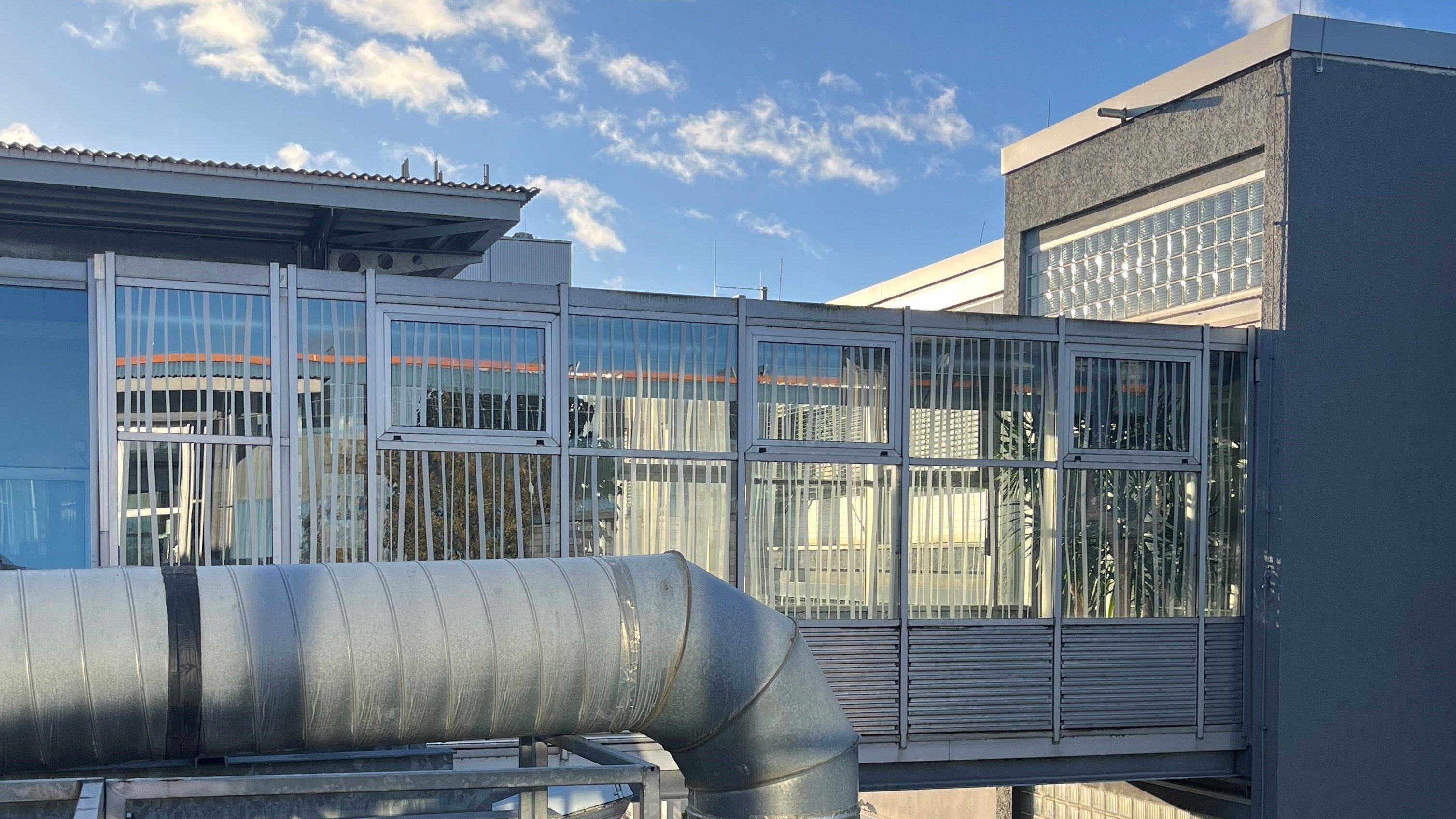
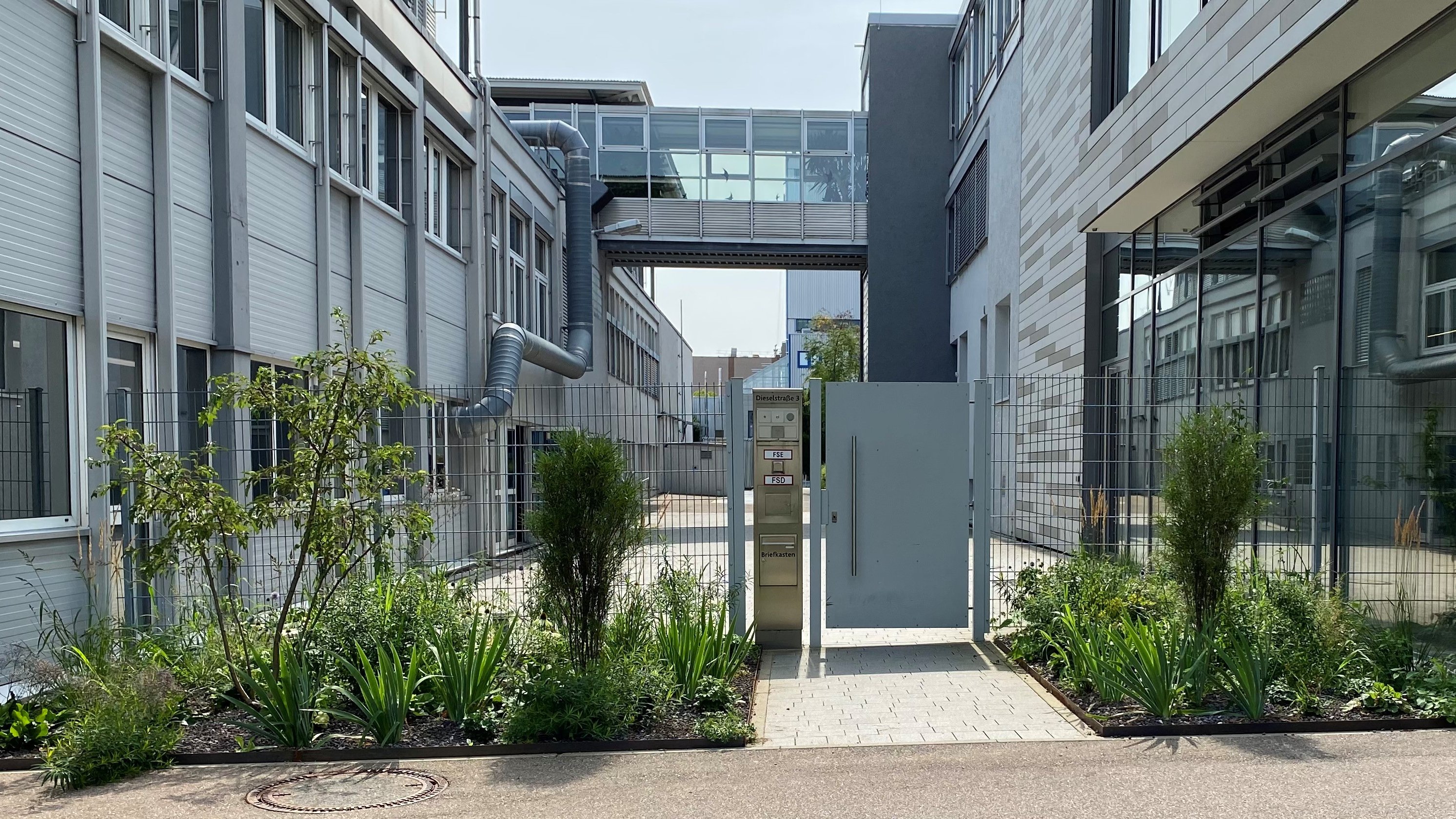
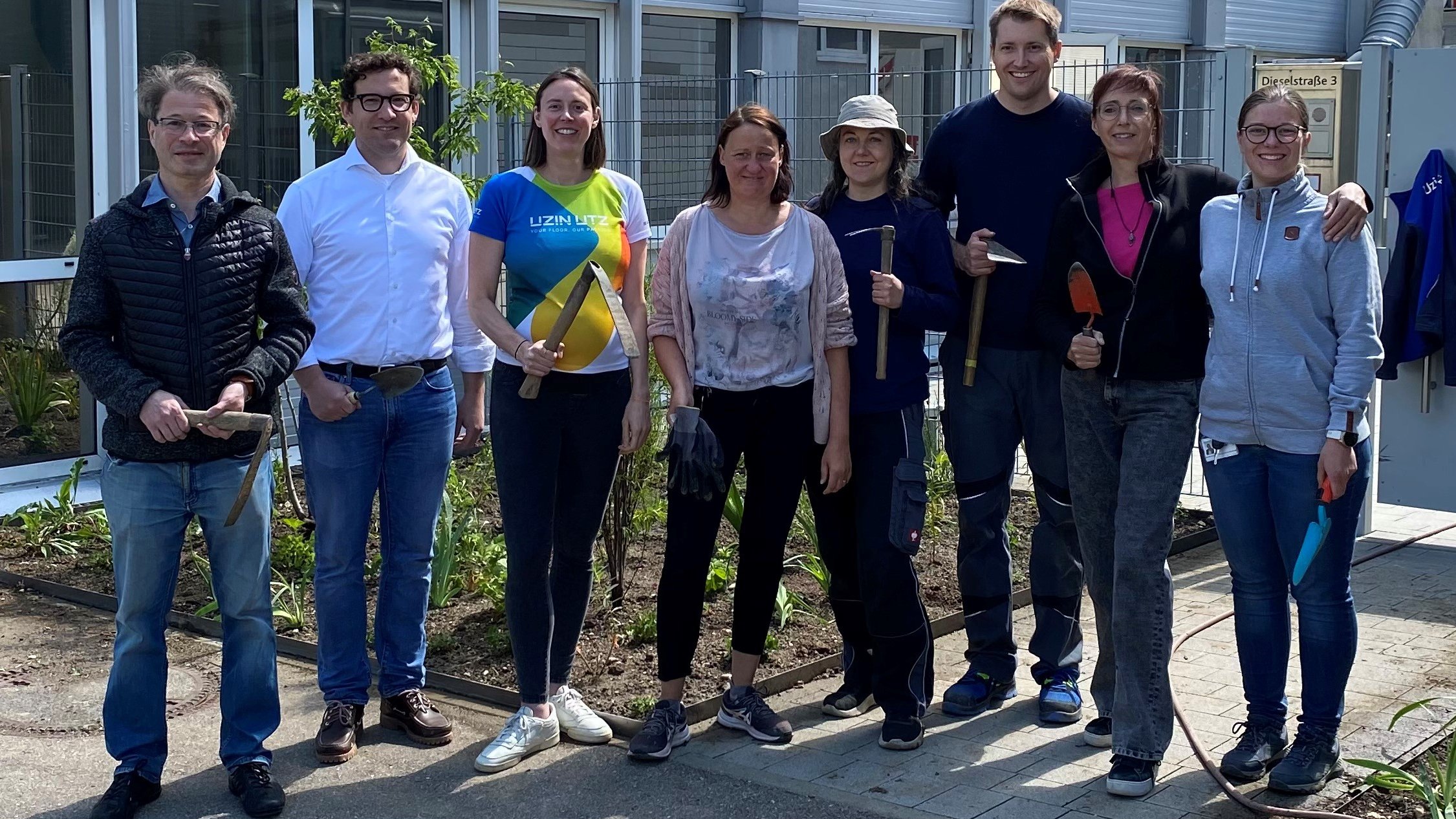
Protecting regional biodiversity is a key priority for UZIN UTZ. Based on a consultation with the “UnternehmensNatur” project team from NABU Baden-Württemberg in 2021, a modular action plan was developed for the nature-oriented design of the approximately 38,000 m² factory grounds at the Uzin Utz SE site in Ulm. Various areas with potential for regeneration and nature-oriented design were identified. Since then, we have implemented various modules for nature-oriented plant design, such as the creation of a wildflower meadow, a wildlife habitat, and greenery on facades and fences. To continue the nature-oriented design of the Uzin Utz SE site, gravel areas at the entrance between Plant 1 and the administrative building on Dieselstraße were converted into ecologically valuable perennial beds in May 2025 as part of an employee initiative. Under the expert guidance of a landscaping company, perennial shrubs, climbing plants on fences, various grasses, and an apple tree (Toringo) were planted. The initiative raised employees’ awareness of ecological interdependencies and contributes locally to improving the microclimate and promoting biodiversity. In addition, new bird strike protection films were installed in 2025 at the passageway between Plant 1 and the administration building in Ulm, complementing the existing protection films at the entrance to the research and development building. Installing these films helps reduce bird mortality rates and supports biodiversity conservation.
Recently, our nature-oriented plant grounds have also become interactive. Information signs with QR codes are located at the various modules on the grounds. The code can be scanned with a smartphone and leads directly to the new website “Nature-Oriented Plant Grounds in Ulm.” Here you will find all the modules implemented to date as part of the action plan for nature-oriented plant design.

Life cycle assessment and sustainable raw materials
Life cycle assessment
Internally, we conduct life cycle assessments as a basis for environmental comparisons, decisions, and goal-setting. We use the results, for example, as the basis for our climate protection goals in the areas of raw materials and packaging. Here, life cycle assessment (LCA) serves as a method for quantifying the potential environmental impacts of products and services throughout their entire life cycle. It is based on the general international standards ISO 14040 and ISO 14044 and can be divided into a total of four phases. The first phase of our analysis focuses on defining the objectives and scope. Subsequently, all material and energy inputs and outputs occurring throughout the life cycle of our products are recorded. Inputs include, among other things, the raw materials used, as well as the amounts of energy and water consumed. Outputs include waste and emissions generated both in the upstream value chain and during manufacturing, use, and at the end of the life cycle. Based on this data, the impact analysis is conducted, and metrics such as the Global Warming Potential (GWP), also known as the carbon footprint or CO₂ balance, are calculated. In the final phase, we evaluate the results: We identify opportunities for more efficient use of energy and raw materials and pinpoint environmental impacts such as pollutant emissions and waste generation. These insights enable us to develop measures to minimise environmental impacts.
Use of more sustainable and bio-based raw materials
Since 2021, UZIN UTZ has been sourcing biomass-balance raw materials, which have a significantly lower carbon footprint than fossil-based raw materials, despite being chemically identical. In the 2025 reporting year, a total of 2,918 tonnes of biomass balance raw materials were purchased. In addition, by using renewable and regional raw materials in our oils, we were able to reduce our carbon footprint by nearly two-thirds compared to previous wood oils. With our ECO₂ CHOICE label, we continue to focus on improving our carbon footprint and are constantly optimising the products of our UZIN, PALLMANN, codex, and Arturo brands
The great thing is to be able to actively shape and establish an awareness of sustainability within the company. The big challenge is to integrate this awareness among colleagues as an integral part of the decision-making processes in their daily work.
Jochen Röck
Application Technology Manager & Co-Sustainability Manager Pallmann GmbH
Management systems and responsibilities
Our integrated “Management System for Responsible Business Practices” is based on the internationally recognised standards DIN EN ISO 9001 and DIN EN ISO 14001. This system defines responsibilities and operational processes, serving as the foundation for continuous improvement in environmental protection. The Environmental Committee is responsible for all environmental matters at our company. This committee meets regularly to discuss current environmental laws and relevant topics. Its members include experts in the fields of environmental management, hazardous substances, waste management, energy and water management, fire safety, occupational safety, and sustainability.
Both Uzin Utz SE and Sifloor AG received certifications in accordance with DIN ISO 9001 and DIN ISO 14001 as part of a certification audit. In addition, Uzin Utz Tools GmbH & Co. KG is also certified in accordance with DIN ISO 9001. The goal of this systematic quality management system is the continuous improvement of corporate performance, as attested by the audited companies.